
Explainers
Do Amish Pay Property Taxes? Yes, and Here's the Proof
Quick answer: Yes, the Amish pay property taxes. Amish families and businesses pay real estate taxes on their homes, farms, and commercial buildings at the same rates as everyone else in their county. That includes local school taxes, even though most Amish children attend private Amish schools rather than the public schools those taxes fund. The famous Amish "tax exemption" is real, but it applies only to Social Security and Medicare taxes, not property taxes.
The idea that the Amish live tax-free is one of the most persistent myths about the community. This article breaks down exactly which taxes the Amish pay, which narrow exemptions they actually have, where those exemptions came from, and why the property tax question has such a surprising answer.
Do Amish People Pay Property Taxes? The Full Answer
If an Amish family owns land, a house, a barn, or a business property, the county assesses it and taxes it exactly as it would for any other owner. There is no religious exemption from property tax anywhere in the United States for individually owned Amish homes and farms. Religious property exemptions in most states apply to houses of worship, and since the Amish typically hold church services in members' homes rather than dedicated church buildings, they generally cannot claim even that exemption the way other denominations can.
In practice, the Amish are often substantial property taxpayers. Consider what a typical Old Order Amish household owns:
- A home, frequently on multiple acres
- Farmland, often 40 to 100+ acres in major settlements
- Barns, workshops, and outbuildings
- In many cases, a small business property (furniture shop, metal fabrication, produce operation)
In counties with large Amish populations, such as Lancaster County, Pennsylvania and Holmes County, Ohio, Amish landowners collectively contribute significant property tax revenue that funds roads, emergency services, and public schools.
The school tax twist
Here is the detail that surprises most people: property taxes are the primary funding source for public schools, and the Amish pay them in full despite educating their own children in private one-room parochial schools at their own additional expense. They effectively pay for education twice, once through property taxes for public schools their children rarely attend, and again through direct support of their community schools. There is no opt-out.
Which Taxes Do the Amish Pay?
The Amish pay nearly every tax that applies to other Americans:
- Property taxes on homes, farmland, and business real estate, including the school portion
- Federal income tax on wages, self-employment earnings, and business profits
- State and local income taxes where they apply, including in Pennsylvania, Ohio, and Indiana, the three states with the largest Amish populations
- Sales tax on purchases, with no religious exemption at the register
- Business taxes on Amish-owned shops, which operate under the same rules as any other small business
- Fuel and gas taxes when buying fuel for generators, farm machinery, and equipment
- Capital gains, estate, and gift taxes when applicable
Amish taxpayers file returns like everyone else, typically on paper, and many use accountants who specialize in serving Plain communities.
What Taxes Are the Amish Exempt From?
The genuine exemptions are narrow, conditional, and come with a permanent trade-off:
- Social Security and Medicare taxes (FICA and self-employment tax). Under Internal Revenue Code section 1402(g), members of recognized religious sects that are conscientiously opposed to public insurance can apply for exemption.
- Federal unemployment tax (FUTA) for qualifying Amish employers and workers, based on the same religious grounds.
The exemption is not automatic. An individual must be a baptized member of a qualifying religious group and must file IRS Form 4029, the Application for Exemption From Social Security and Medicare Taxes and Waiver of Benefits. The name of the form tells the whole story: to get the exemption, the applicant permanently waives all rights to Social Security retirement, disability, survivor, and Medicare benefits. The Social Security Administration confirms that members must waive all benefits under the Social Security Act to qualify. Anyone who has already received Social Security benefits is generally ineligible.
In other words, the Amish are not getting something for nothing. They give up the entire benefit side of the system in exchange for not paying into it, and they fund their own safety net instead. Elderly care, medical bills, disaster recovery, and support for widows and the disabled are handled within the church community through mutual aid, a practice they consider a core religious obligation.
One more wrinkle: the exemption has limits even for the Amish. An Amish person employed by a non-Amish employer without the exemption generally still has Social Security taxes withheld, and because of Form 4029, may never be able to claim the benefits those withholdings would normally earn.
Why Do the Amish Have a Social Security Exemption? A Short History
The exemption was born from a standoff in the late 1950s and early 1960s. When Social Security was extended to self-employed farmers in the 1950s, many Amish refused to pay on religious grounds, believing that commercial insurance and government old-age programs displace the community's biblical duty to care for its own. The IRS responded with enforcement, and the conflict came to a head in 1961 when agents seized horses from an Amish farmer named Valentine Byler in Pennsylvania to settle unpaid Social Security taxes. The image of the government taking a farmer's plow horses generated national sympathy, and in 1965 Congress created the religious exemption as part of the same legislation that established Medicare.
The boundaries were tested again in United States v. Lee (1982), where the Supreme Court ruled that an Amish employer still had to pay Social Security taxes for his Amish employees; the statutory exemption at that time covered only the self-employed. Congress later broadened the rules so that the exemption can apply where both the employer and the employee are members of a qualifying sect. The result is today's system: a carefully fenced exemption for Social Security, Medicare, and unemployment taxes, and full liability for everything else, including property tax.
Taxes the Amish Pay vs. Taxes They're Exempt From
| Tax | Do Amish Pay It? | Notes |
|---|---|---|
| Property tax | Yes | Full rate, including school taxes |
| Federal income tax | Yes | Same rules as all taxpayers |
| State/local income tax | Yes | Where applicable |
| Sales tax | Yes | No religious exemption at purchase |
| Business taxes | Yes | Amish businesses follow standard rules |
| Fuel/gas taxes | Yes | On fuel for equipment and generators |
| Social Security & Medicare | Exempt if approved | Requires Form 4029 and permanent waiver of all benefits |
| Federal unemployment (FUTA) | Exempt if qualifying | Community provides its own support |
Common Myths About Amish Taxes, Debunked
Myth 1: The Amish don't pay taxes. False. They pay property, income, sales, business, and fuel taxes. Their exemption covers only specific federal insurance programs whose benefits they permanently renounce.
Myth 2: The Amish don't pay school taxes because they have their own schools. False. School taxes are part of the property tax bill, and the Amish pay it in full while separately funding their own parochial schools.
Myth 3: Amish businesses operate tax-free. False. Amish-owned furniture shops, construction crews, and farm operations pay the same business and income taxes as competitors. The only difference is the Social Security and Medicare exemption where both employer and employees qualify.
Myth 4: The exemption is a loophole anyone can claim. False. It requires membership in a recognized religious sect with established teachings against public insurance, a formal IRS application, and a lifetime waiver of benefits. Claiming it without qualifying is tax fraud.
Myth 5: The Amish use services without paying for them. Mostly backwards. The Amish pay property taxes that fund public schools they don't use, and road taxes through fuel purchases while primarily traveling by horse and buggy. On several fronts they pay into systems they draw from lightly.
How Do Amish Pay Property Taxes?
Mechanically, the same way everyone else does. The county assessor values the property, the tax bill arrives, and payment is due by the local deadline. Amish taxpayers commonly pay in person at the treasurer's office or by mail with a check. One practical note for anyone paying by mail, Amish or not: recent USPS changes mean envelopes may be postmarked days after mailing, which can make a mailed payment legally late. And like any other property owner, Amish farm and business owners can challenge an assessment they believe is too high through the local appeal process; our guide to commercial property tax appeals covers how that works.
Frequently Asked Questions
Do Amish pay property taxes?
Yes. Amish individuals and families pay property taxes on their homes, farms, and business properties at the same rates as other residents of their county. There is no religious exemption from property tax, and their bills include the school tax portion that funds public schools.
Do Amish pay school taxes if they don't use public schools?
Yes. School funding comes largely from property taxes, and the Amish pay them in full even though most Amish children attend private Amish parochial schools. The community funds its own schools separately, on top of the taxes it pays.
Are the Amish tax exempt?
No, not in general. The Amish pay property, income, sales, business, and fuel taxes. Their only significant exemptions are from Social Security, Medicare, and federal unemployment taxes, and those require IRS approval through Form 4029 along with a permanent waiver of all corresponding benefits.
Why don't the Amish pay Social Security taxes?
Their religious teachings hold that the community, not the government or commercial insurance, is responsible for caring for the elderly, sick, and disabled. Congress created a legal exemption in 1965 under Internal Revenue Code section 1402(g) for members of religious sects opposed to public insurance. Those who claim it can never collect Social Security or Medicare benefits.
Do Amish businesses pay taxes?
Yes. Amish-owned businesses pay income taxes, applicable business taxes, and property taxes on commercial real estate just like any other business. The Social Security and Medicare exemption can apply to their payrolls only when both the employer and the employees are members of a qualifying religious group with approved exemptions.
Do Amish get anything in return for the taxes they pay?
They receive the same local services as their neighbors: roads, law enforcement, fire and emergency response, and courts. What they voluntarily forgo are the federal benefit programs they don't pay into, such as Social Security retirement and Medicare, replacing them with church-based mutual aid.
The Bottom Line
The Amish pay property taxes, fully and without exemption, along with income, sales, business, and fuel taxes. Their reputation as tax-exempt comes from one narrow carve-out: a religiously grounded exemption from Social Security, Medicare, and unemployment taxes that Congress created in 1965 and that requires giving up every benefit those programs offer. Far from freeloading, the Amish are in the unusual position of paying for public schools they rarely use while funding a private education system and a complete social safety net out of their own pockets.
Tax rules and exemption requirements are set by federal law and administered by the IRS and Social Security Administration. This article is for general information, not tax advice.
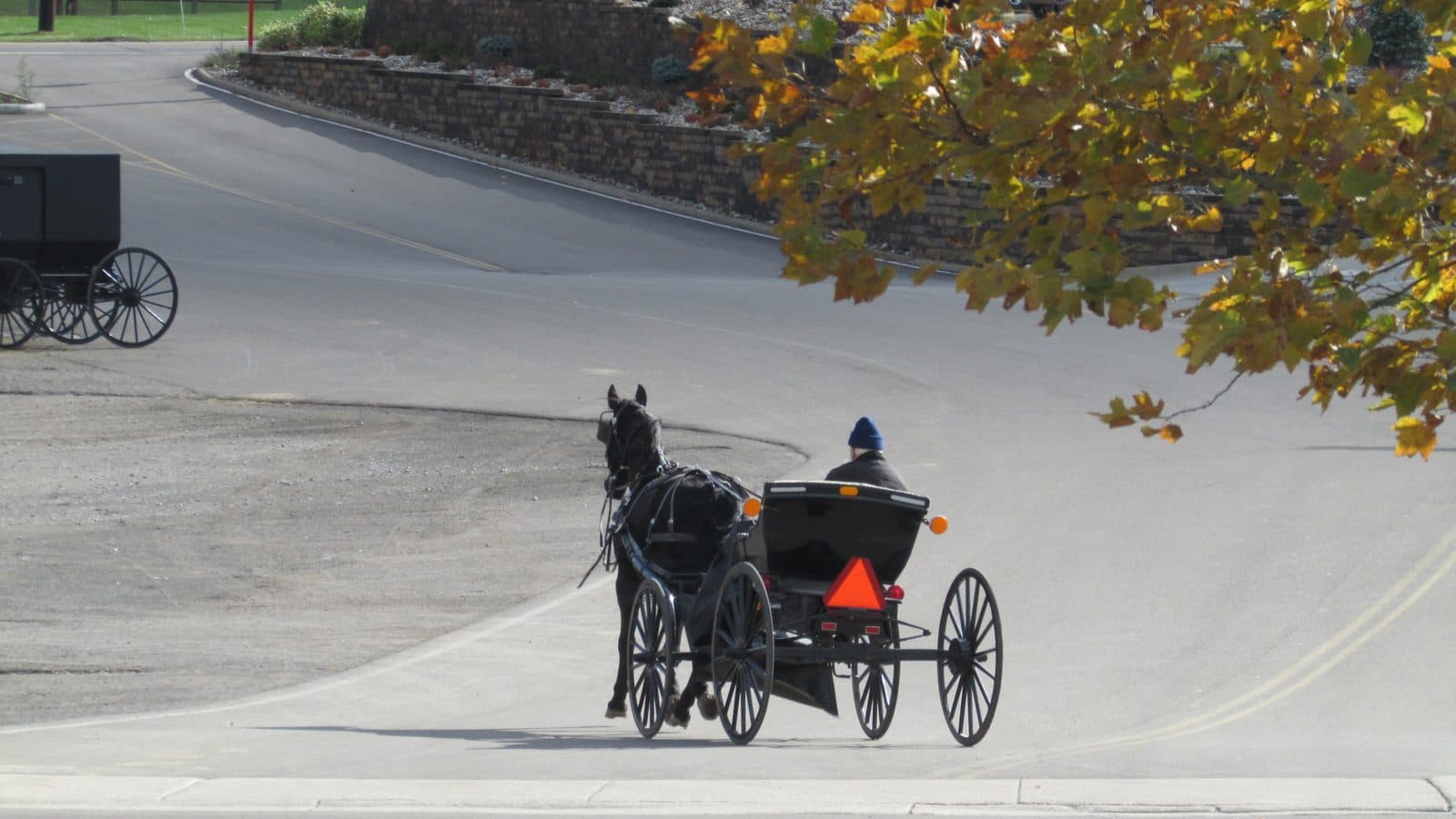
Photo: Chris Light via Wikimedia Commons, CC BY-SA 4.0, cropped.