
Deadlines
USPS Policy Changes May Cause Late Property Tax Payments
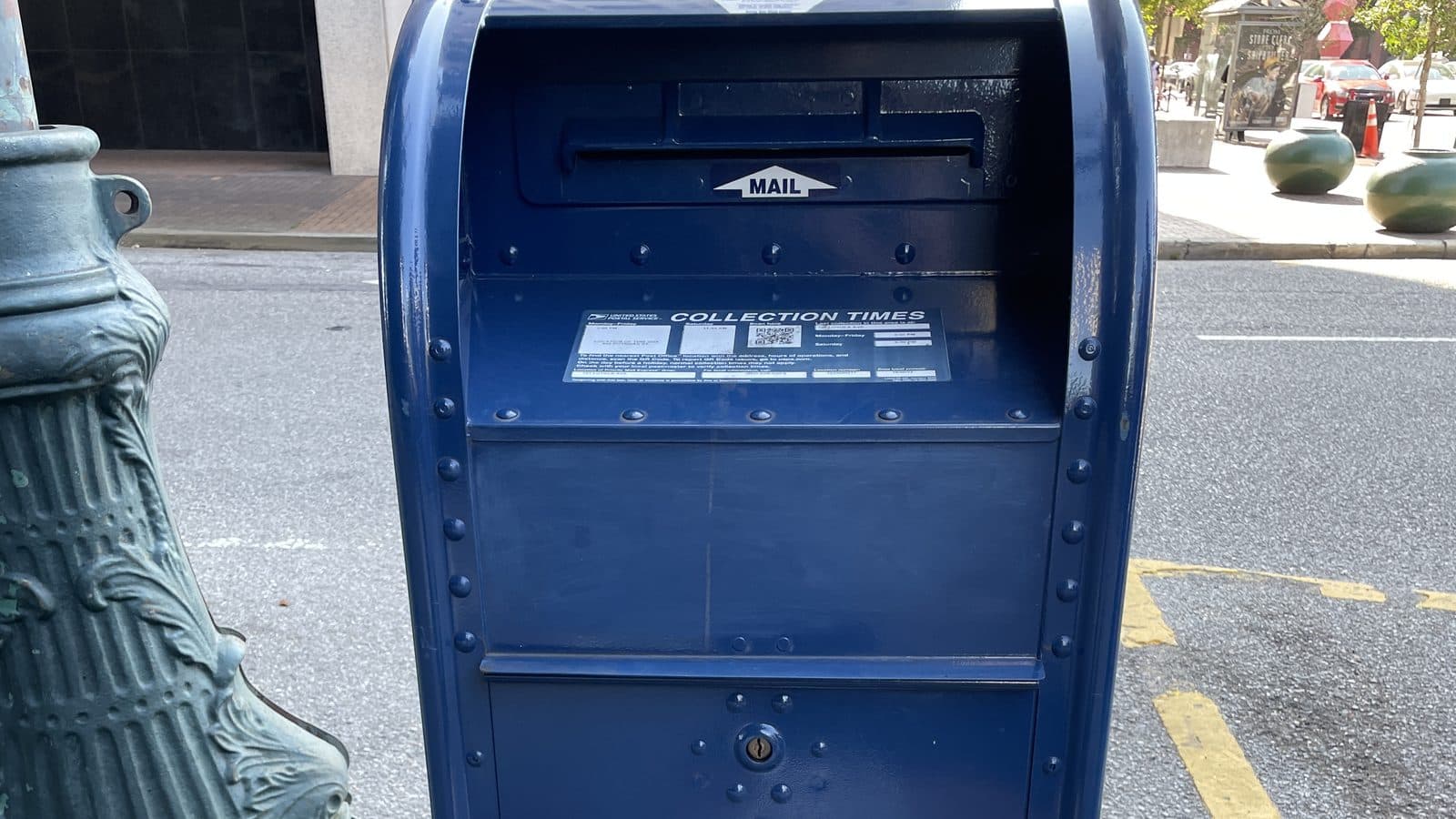
If you mail your property tax payment, a quiet change at the post office could cost you real money. USPS policy changes may cause late property tax payments even when you drop your envelope in the mailbox days before the deadline. The reason comes down to one small detail with big legal weight: the postmark.
In August 2025, the United States Postal Service changed how and where it postmarks mail. Postmarks are no longer applied at the local post office on the day your envelope enters the mail stream. They are now stamped at regional sorting centers, which can be one to three days later, sometimes more. Because most tax offices use the USPS postmark date to decide whether your payment arrived on time, that lag can turn an on-time payment into a delinquent one, complete with penalties and interest.
Here is exactly what changed, why it matters, and the steps you can take to make sure your payment is never counted as late.
What Changed in the USPS Postmark Policy
For decades, mail was generally postmarked on the same day the Postal Service first received it, either at your local post office or shortly after pickup from a collection box. That is no longer the case.
As part of a nationwide overhaul of its transportation and processing network, USPS consolidated operations so that mail now travels to a regional sorting facility before receiving a postmark. The practical result:
- Your envelope may sit in transit for one to three days (or longer in rural areas) before it is postmarked.
- The postmark date reflects when the mail reached the regional facility, not when you mailed it.
- County treasurers across the country, from Wisconsin to Texas to Florida, have issued public warnings that taxpayers are seeing multi-day gaps between the date they mailed a payment and the date stamped on the envelope.
The Travis County, Texas Tax Assessor-Collector reported seeing a roughly three-day lag between the date written on taxpayers' checks and the postmark applied by USPS. In areas served by distant sorting centers, the gap can be even wider.
Why the Postmark Date Decides Whether Your Payment Is Late
Most people assume that mailing a payment before the deadline is enough. Legally, what usually matters is the postmark.
Under federal law, this is known as the mailbox rule (26 U.S. Code Section 7502). If a tax payment or return arrives after the due date, the USPS postmark date is treated as the date of payment or filing. Most states and counties apply a similar standard to property taxes: a payment is timely if it is postmarked on or before the deadline. (The mailbox rule is federal, but the property tax itself never is; there is no federal property tax, and every property tax bill comes from state and local governments.)
That rule used to work in taxpayers' favor. Now it can work against you:
- You mail your payment two days before the deadline.
- The envelope travels to a regional sorting center and is postmarked three days later.
- The postmark date falls after the deadline.
- Your payment is legally delinquent, even though you did everything "right."
There is a second trap worth knowing. If your envelope arrives with no USPS postmark at all, or only a private meter mark (such as from a Pitney Bowes machine or a bank's bulk bill-pay service), many tax offices are required to treat the payment as received on the date it physically arrives. Bank bill-pay checks are a common casualty here because they are often mailed in bulk without an official USPS postmark.
What a Late Property Tax Payment Actually Costs
Penalties vary by state and county, but they are rarely trivial:
- Texas: Penalties and interest start at 7% of the amount due the day after the delinquency date and climb each month.
- California (Santa Clara County example): A 10% penalty plus a $20 fee applies to payments not received or postmarked by the due date.
- Wisconsin and many other states: Late payments accrue monthly interest and can void installment payment privileges, making the full year's balance due immediately.
The stakes scale with the size of the bill. If you are paying property taxes on business real estate, a postmark slip can cost thousands, and the bill itself is worth a second look: see our guide to commercial property tax appeals for how owners challenge over-assessed values. And if penalties have already snowballed into a bill you cannot pay at once, read our unbiased guide to property tax loans before borrowing; cheaper county options often exist.
Who Else Is Affected by the USPS Postmark Change
Property taxes get the headlines, but the same postmark logic applies to anything with a legal mailing deadline:
- Federal and state income tax returns and payments, including quarterly estimated taxes. The IRS National Taxpayer Advocate has warned that the new USPS rules could affect whether a tax filing is considered on time.
- Voter registration forms and mail-in ballots in states that use postmark deadlines.
- Court filings, license renewals, and government fees that rely on mailing dates.
If a deadline in your life depends on a postmark, this change affects you.
How to Protect Yourself: 6 Ways to Avoid a Late Property Tax Payment
The safest USPS property tax mailing strategy is to assume your envelope will be postmarked several days after you send it, and to keep proof of when you actually mailed it. These six steps put that into practice.
1. Mail at least 7 to 10 days before the deadline
This is the simplest fix. Build in enough buffer that even a multi-day postmark lag cannot push you past the due date. Treat the "real" deadline as a week earlier than the printed one.
2. Ask for a hand postmark at the counter
Walk your envelope into a post office and ask the clerk to hand-stamp (round-date) it in front of you. A hand-applied postmark carries the date you actually mailed the payment. This is the most reliable way to lock in a same-day postmark.
3. Use Certified Mail with a receipt
Certified Mail gives you a dated receipt proving when USPS accepted your envelope, plus tracking. If your payment is ever disputed as late, that receipt is your evidence. The few dollars it costs is cheap insurance against a 7% to 10% penalty.
4. Pay online with e-check
Most county tax offices offer electronic check payments with instant confirmation, typically for a flat fee of $1 to $2. This removes the postal system from the equation entirely and gives you a timestamped receipt. Card payments work too, but often carry a 2% to 3% convenience fee, so e-check is usually the better value.
5. Avoid your bank's bill-pay service for tax payments
Bank bill-pay checks are frequently mailed in bulk without an official USPS postmark. Without that postmark, many tax offices count the payment as of the date it arrives, not the date it was sent. If you must use bill-pay, schedule it at least two weeks ahead of the deadline.
6. Pay in person or use the tax office drop box
Many county treasurer offices accept in-person payments or have secure drop boxes that are emptied and dated daily. Check your county's rules for drop box cutoff times on deadline day. Paying at the counter is still common in plenty of communities; the Amish, for example, pay property taxes like everyone else and often do it in person or by mailed check.
Payment Method vs. Postmark Risk
| Payment Method | Postmark Risk | Proof of Timely Payment |
|---|---|---|
| Regular mail (mailbox drop) | High: postmark may lag 1 to 3+ days | None |
| Hand postmark at post office counter | Low | Postmark dated same day |
| Certified Mail | Low | Dated receipt + tracking |
| Bank bill-pay | High: often no USPS postmark at all | Weak |
| Online e-check | None | Instant confirmation |
| In-person / county drop box | None | Receipt or dated drop |
Frequently Asked Questions
When did USPS change its postmark policy?
The nationwide change took effect in August 2025 as part of USPS network consolidation. Postmarks are now applied at regional sorting centers rather than when mail first enters the postal system, so the postmark date can be one to three days (or more) after the day you mail an item.
Is my property tax payment late if the postmark is after the deadline?
In most jurisdictions, yes. Federal and state laws generally define a timely payment by the USPS postmark date. If the postmark falls after the due date, the payment is treated as delinquent and penalties and interest usually apply, even if you placed it in a mailbox before the deadline.
How do I get a same-day postmark on my tax payment?
Take your envelope inside a post office before the counter closes and ask the clerk to hand-stamp it with that day's date. You can also send it by Certified Mail, which provides a dated acceptance receipt that serves as proof of timely mailing.
Does the USPS postmark change affect IRS tax returns too?
Yes. The federal mailbox rule uses the USPS postmark to determine whether returns and payments are filed on time, so the same delay risk applies to income tax returns, extensions, and quarterly estimated payments. The IRS National Taxpayer Advocate has published guidance warning taxpayers about this issue.
What happens if my envelope has no postmark?
Most tax offices treat mail without an official USPS postmark as received on the date it physically arrives. Private meter marks and bank bill-pay envelopes often do not count as USPS postmarks, which is why those methods carry extra risk near a deadline.
The Bottom Line
The rule has not changed: your property tax payment is on time if it is postmarked by the deadline. What changed is how long it takes to get that postmark. Under the new USPS process, dropping a payment in the mailbox the day before taxes are due is no longer safe. Mail early, get a hand postmark or Certified Mail receipt, or skip the mail entirely and pay online with e-check. A few minutes of planning protects you from penalties that can run into the hundreds of dollars.
Handling a tax bill for a home you just inherited? The mailing rules above apply from day one, and the good news is that the federal side is friendlier than you may fear; see our guide to capital gains tax on inherited property. The same goes for trustees: if the home sits in a living trust, the tax bill still arrives on schedule, and our guide to the tax implications of transferring property into a trust explains what the trustee is responsible for. And if you are buying a home on a land contract, the mailed payment is usually your job even though the deed is not yet in your name; see who pays property taxes on a land contract.
Deadlines, penalties, and payment options vary by state and county. Check with your local treasurer or tax collector for the rules that apply to your property.
Photo: Ktkvtsh via Wikimedia Commons, CC BY 4.0, cropped.