
Explainers
Appraised Value vs. Market Value in Texas: Reading Your Notice
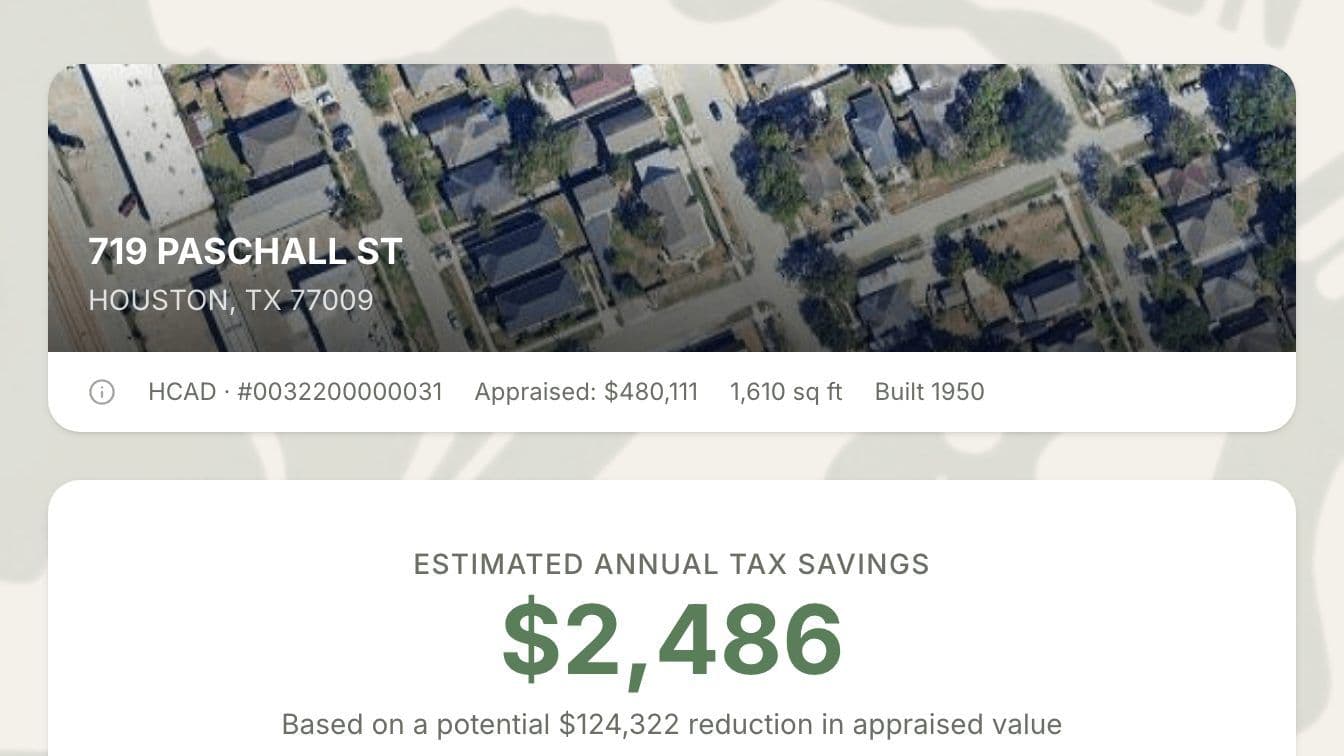
The Notice of Appraised Value that lands in Texas mailboxes each April lists more than one value for your home, and they are frequently different numbers. Homeowners who do not know which is which end up protesting the wrong one, or not protesting at all because the number that went up looked like the one they could not change. This explainer walks through each line, explains why the values diverge, and shows which one a protest actually targets.
The three values on your notice
Texas uses three related figures. From Tax Code Chapter 23 and Chapter 25:
1. Market value. The appraisal district's estimate of the price your property would sell for on January 1 in an arm's-length sale (Section 1.04(7) and Section 23.01). This is the district's opinion, produced by a mass-appraisal model, and it is the number a protest challenges.
2. Appraised value. The value on which taxes are based. For most property it equals market value. For a residence homestead it is the market value limited by the 10% cap under Section 23.23, and for non-homestead real property under about $5 million it is limited by a 20% cap under Section 23.231 through the 2026 tax year. When the cap is active, appraised value sits below market value.
3. Taxable value. Appraised value minus your exemptions. With the 2026 homestead exemption, a home's school-district taxable value is its appraised value minus $140,000 ($200,000 for owners 65 or older or disabled), and other taxing units subtract their own exemptions. Taxable value can differ by taxing unit, which is why tax bills list it more than once.
Texas has no assessment ratio: property is taxed at 100% of appraised value less exemptions. "Assessed value," a term from other states, does not appear in Texas law, though people use it loosely to mean either the appraised or taxable value.
A worked example
A Harris County homestead in a fast-appreciating neighborhood:
| 2025 | 2026 | |
|---|---|---|
| Market value (district's estimate) | $350,000 | $420,000 (+20%) |
| Appraised value (10% cap applied) | $350,000 | $385,000 (+10%) |
| School taxable value ($140,000 exemption) | $250,000 | $245,000 |
The market value rose 20%, but the capped appraised value rose only 10%, and because the school exemption grew from $100,000 to $140,000 for 2026, the school taxable value actually fell. The owner's school taxes went down in a year their home gained $70,000 in value on paper.
Now suppose the owner protests and gets the market value reduced from $420,000 to $395,000. The appraised value stays at $385,000 (the cap still binds), so this year's bill does not change. But next year the cap grows from $385,000 toward a $395,000 ceiling instead of a $420,000 one, so the protest still paid off, just with a delay.
Why the numbers diverge
The homestead cap (10%)
Once you have a homestead exemption, your appraised value cannot increase by more than 10% per year over the prior year's appraised value, plus the market value of any new improvements. The cap starts the year after you first qualify, and it resets when the property sells. In a run of hot years the gap between market and appraised value can reach 20% to 30%; in flat or falling years the appraised value keeps rising 10% until it catches up. That catch-up is why homeowners sometimes see their taxable value rise in a year their market value dropped.
The non-homestead cap (20%)
Senate Bill 2 in 2023 added a temporary 20% cap on the appraised value of non-homestead real property (rentals, second homes, small commercial) with a market value under an inflation-adjusted threshold of roughly $5 million, for the 2024 through 2026 tax years. It works like the homestead cap and is scheduled to expire after 2026 unless the Legislature extends it.
Exemptions
Exemptions do not change market or appraised value; they reduce taxable value. A missing homestead exemption shows up here as a taxable value equal to the full appraised value.
The district's model versus reality
Market value is an estimate from a statistical model using sales of comparable properties, adjusted by characteristics in the district's records. The model is only as good as the record. Common reasons a market value is too high:
- Square footage or room counts are wrong in the district's data
- Condition is coded as average or good when the home needs a roof, foundation work, or a full update
- Comparable sales are not comparable: new construction, a remodeled home, or a different subdivision used to value an original 1978 house
- Land value was reset after nearby lot sales that do not reflect an improved lot
Every one of these is fixable through a protest. Our guide to protesting property taxes in Texas covers the evidence for each.
Which value you protest, and what happens if you win
A protest under Section 41.41 challenges the market value (and, for the unequal-appraisal ground, the appraised value relative to comparable properties). If the ARB lowers your market value:
- Your appraised value drops to match if it was equal to market value, or stays at the capped figure if the new market value is still above the cap
- Your taxable value follows the appraised value, minus exemptions
- Next year's cap calculation starts from the new, lower figure
Reading the rest of the notice
Under Section 25.19, the notice must also show:
- Last year's and this year's values side by side
- The exemptions applied
- The protest deadline (May 15 or 30 days after the notice, whichever is later; see the deadline guide)
- Instructions for filing a protest and requesting the district's evidence
- An estimate of taxes, or a pointer to the Truth-in-Taxation website where each taxing unit posts proposed rates
Check the exemptions line first. Then compare this year's market value to what similar homes near you actually sold for. If the district's number is higher than the sales support, file. If the number is fair but the exemptions are wrong, fix the exemptions. The Texas property tax guide explains how values, exemptions, and rates combine into the bill you get in October.
This article is general information, not tax advice. Notice formats vary slightly by appraisal district.